
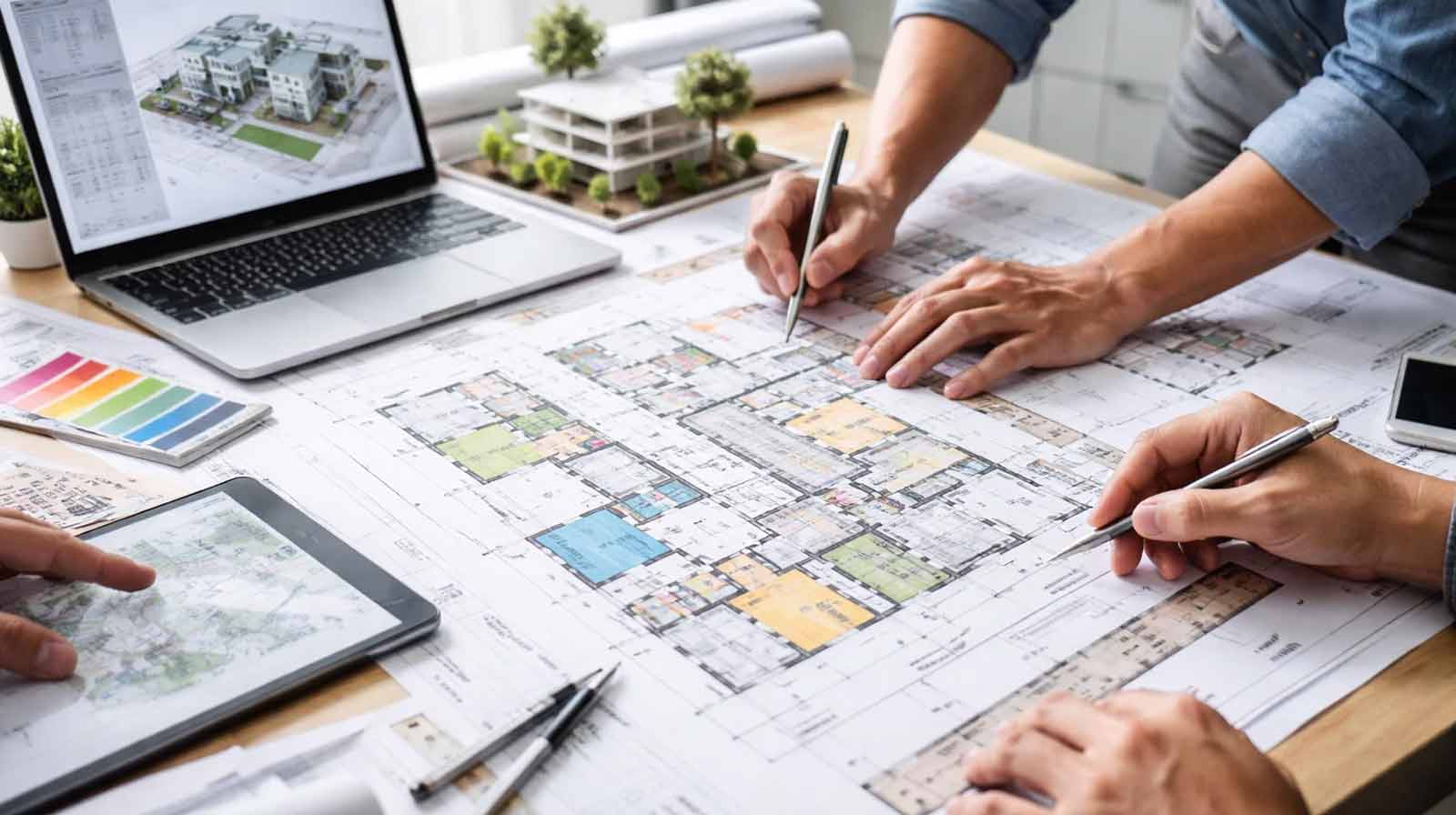
In modern construction, the earliest decisions often determine the success or failure of a project. One of the most critical stages is schematic design, where ideas begin to take shape, and the overall direction of the project is defined. At this point, clarity is more important than perfection. The goal is to create a shared understanding between all stakeholders before significant time and money are invested.
With the integration of BIM workflows and advanced scanning technologies, this phase has evolved far beyond simple sketches. Today, teams can test ideas, validate assumptions, and detect potential issues before they turn into costly problems. This not only improves accuracy but also increases confidence in decision-making, which is essential for complex, modern construction projects.
Table of Contents
Understanding the Foundations of Schematic Design
At its core, this phase is about translating vision into a structured and testable concept. Instead of abstract thinking, designers begin organizing spaces, defining building form, and establishing how the project will function in reality.
Several key factors are addressed here: spatial relationships between rooms, building orientation, site limitations, and basic system requirements. For example, decisions about building footprint or vertical circulation are often made at this stage and can significantly impact cost and usability.
It is also the phase where constraints become visible. Budget limitations, zoning regulations, and site conditions all begin shaping the design. By addressing these early, the team reduces uncertainty and creates a roadmap that guides the rest of the project.
A Step-by-Step Look at the Schematic Phase
Before diving into the detailed steps, it’s important to understand that the schematic design phase is a structured, sequential process. Each step builds upon the previous one, ensuring that the project moves from abstract ideas to a well-coordinated and feasible design. By following a clear sequence, teams can identify potential issues early, make informed decisions, and set a strong foundation for the next stages of the project.
Step 1: Collecting Project Information
The process starts with gathering all critical inputs that will shape the design direction. This includes site analysis (topography, access, surroundings), client requirements (functional needs, priorities, budget), and local regulations such as zoning laws and building codes. Existing drawings, surveys, or point cloud data are also reviewed at this stage. The quality of this step is crucial; if the input data is incomplete or inaccurate, it can lead to flawed assumptions and costly corrections later.
Step 2: Defining Project Goals and Constraints
After collecting data, the team translates it into clear design criteria. This means identifying what the project must achieve (space requirements, performance goals) and what limitations exist (budget, site restrictions, timelines). At this point, the team aligns with the client to avoid misunderstandings later. Clear goals act as a decision-making framework throughout the rest of the phase.
Step 3: Concept Exploration and Option Development
Designers begin creating multiple layout options to explore different possibilities. These can vary in terms of building form, orientation, circulation flow, and spatial organization. Instead of jumping to one solution, several alternatives are tested to compare strengths and weaknesses. Each option is evaluated not just visually, but also based on efficiency, feasibility, and how well it meets the project goals.
Step 4: Evaluating and Selecting the Preferred Concept
Once different options are developed, the team reviews them with stakeholders. Discussions focus on usability, cost implications, constructability, and overall design intent. Feedback from clients, engineers, and consultants is incorporated to refine the direction. The goal of this step is to confidently select one concept that balances creativity with practicality.
Step 5: Developing the Initial Design into Structured Outputs
After selecting the preferred option, the design is developed into clearer and more organized representations. This includes floor plans, basic elevations, and preliminary system layouts. At this stage, the design becomes easier to communicate and review. Tools like 3D BIM modeling services play a key role here, allowing teams to create intelligent models instead of static drawings and better understand spatial relationships.
Step 6: Early Coordination Between Disciplines
With a more defined layout, different disciplines begin coordinating their work. Architects, structural engineers, and MEP teams review how their systems interact within the design. This early coordination helps identify clashes or spatial conflicts before they become major issues. It significantly reduces the risk of redesign in later phases.
Step 7: Validation and Refinement of the Design
The final step involves validating the design against all project constraints. The team checks alignment with budget, code requirements, and client expectations. Adjustments are made where necessary to improve feasibility and performance. By the end of this step, the design should be clear, coordinated, and ready to move into the next phase with confidence.

Why Early Design Decisions Matter More Than You Think
One of the most important principles in construction is that the cost of change increases over time. During early design, changes are relatively inexpensive and easy to implement. However, once construction begins, even small modifications can lead to delays and high costs.
This phase is where major project risks are either introduced or eliminated. Decisions about layout, structure, and systems directly affect constructability, energy performance, and long-term maintenance. Poor decisions here often result in clashes, inefficiencies, or redesigns later.
On the other hand, a well-developed early design improves coordination, reduces uncertainty, and creates a smoother transition into later phases. It essentially sets the tone for the entire project.
Key Stakeholders and Their Roles
Schematic design requires close collaboration between multiple disciplines. While architects lead the spatial and visual direction, they rely heavily on input from engineers, consultants, and the client.
Mechanical, electrical, and plumbing engineers play a critical role in ensuring that building systems are feasible within the proposed layout. By using MEP BIM modeling services, they can analyze system requirements early and identify potential conflicts before they become serious issues.
Clients are also deeply involved at this stage. Their feedback helps refine the design and ensures that it aligns with functional needs and expectations. Meanwhile, project managers monitor scope, budget, and timeline to keep everything on track. Effective communication between all parties is essential for a successful outcome.
What Happens After the Initial Design Stage
Once the schematic phase is approved, the project moves into design development. This is where the design becomes more detailed and technically defined. During this stage, materials, dimensions, and systems are specified more precisely. Engineers develop detailed calculations, and coordination between disciplines becomes more rigorous. Any uncertainties or conflicts identified during schematic design are resolved to ensure that the design is fully buildable. This phase acts as a bridge between concept and execution, preparing the project for the creation of construction documents.
The Full Design Journey in Construction Projects
To truly understand the value of this phase, it’s important to see how it fits into the complete lifecycle of a construction project. Each stage of the design journey has a specific purpose, and skipping or rushing any of them, especially the early ones, can create serious issues later on.
Concept Design is the starting point, where ideas are explored freely. At this stage, the focus is on defining the overall vision of the project, its purpose, general form, and high-level layout. There is minimal technical constraint, which allows creativity to drive the process. However, these ideas are still rough and need to be tested against reality.
This is where schematic design comes in. It takes the initial concepts and begins shaping them into something more structured and feasible. Spatial relationships are clarified, basic systems are considered, and the design starts aligning with site conditions, regulations, and budget. This phase acts as the critical filter that determines whether a concept can realistically move forward.
After that, the project enters Design Development, where the level of detail increases significantly. Materials, structural systems, and building components are defined more precisely. Engineers perform deeper analysis, and coordination between disciplines becomes much tighter. At this stage, most of the design decisions are finalized, leaving less room for major changes.
The next phase is Construction Documentation, where the design is translated into detailed drawings and specifications that contractors will use to build the project. Accuracy and clarity are essential here, as any missing or unclear information can lead to delays, errors, or cost overruns during construction.
Finally, the project moves into the Construction Phase, where the design is physically realized on-site. At this point, the ability to make changes is very limited and expensive, which is why the quality of earlier phases is so critical.
What’s important to understand is that each phase builds directly on the previous one. Decisions made early, especially during conceptual and schematic stages, have a cascading effect throughout the project. A poorly considered layout, for example, can lead to structural inefficiencies, MEP conflicts, or construction challenges later on.
On the other hand, when sufficient time and attention are given to early design, the downstream phases become much smoother. Teams experience fewer conflicts, better coordination, and more predictable timelines and costs. This is why experienced professionals prioritize early-stage planning over rushing into detailed design.

What are the Different Types of Schematic Design?
Schematic design is not a one-size-fits-all process; it can take different forms depending on the project type, scale, and objectives. Understanding these variations helps teams choose the right approach for efficiency, accuracy, and creativity.
1. Functional Schematic Design
This type focuses on ensuring that the building layout meets all practical requirements. It emphasizes spatial organization, circulation flow, and programmatic efficiency. Functional schematic design is particularly important for complex facilities such as hospitals, schools, or industrial plants, where operational workflows must be clearly defined from the beginning.
2. Aesthetic or Concept-Driven Schematic Design
Here, the emphasis is on exploring visual forms, massing, and architectural expression while still adhering to basic constraints. Designers may experiment with building shapes, façades, or site relationships. While feasibility is still considered, this type allows creativity to guide the initial structure of the project.
3. Systems-Oriented Schematic Design
In projects with significant technical requirements, such as high-rise buildings or facilities with complex MEP systems, schematic design focuses on integrating these systems early. By considering mechanical, electrical, plumbing, and structural elements from the start, teams can avoid conflicts later. Tools like MEP BIM services and BIM coordination services are particularly valuable for this approach.
4. Contextual or Site-Specific Schematic Design
Some projects require a strong response to site conditions, topography, climate, or heritage constraints. This type emphasizes aligning the design with its context while balancing regulatory requirements and budget. Early use of scan-to-BIM services can capture accurate site conditions and inform spatial planning in these scenarios.
5. Hybrid Approaches
Often, projects combine elements of the above types. For instance, a hospital may need functional schematic design for patient flow, aesthetic design for public areas, and systems-oriented design for complex medical equipment. Recognizing the hybrid nature of schematic design ensures that all priorities are addressed without compromise.
Schematic design vs concept design
Understanding the difference between concept design and schematic design is critical for the success of any construction project. Although these phases are closely linked, they serve very distinct purposes and require different approaches, tools, and outcomes.
Concept Design is primarily about creativity and exploration. At this stage, the goal is to generate as many ideas as possible without being limited by technical constraints. Designers experiment with building forms, layouts, circulation patterns, and spatial relationships to explore multiple possibilities. The focus is on vision, aesthetics, and innovative solutions. Technical feasibility, structural systems, and detailed budgets are not the primary concern at this point. This is why concept design is often more fluid, flexible, and sometimes abstract.
Schematic Design, on the other hand, introduces structure and practical constraints. Once the best concepts have been identified, schematic design evaluates them against real-world conditions, such as budget limitations, site conditions, local regulations, and engineering requirements. Here, the design becomes more precise and organized, with initial floor plans, elevations, and system layouts being created. Advanced tools like BIM modeling services or scan-to-BIM services may be used to ensure that the design aligns with reality and to coordinate between disciplines. Schematic design serves as a reality check, translating abstract ideas into actionable plans.
The transition from concept design to schematic design is crucial. A concept that looks visually appealing may not be feasible in practice if it doesn’t consider structural limitations, mechanical and electrical systems, or cost constraints. Schematic design ensures that the project is not only compelling but also practical, buildable, and ready for the next design stages.
Below is a comparison table summarizing the key differences:
| Feature | Concept Design | Schematic Design |
|---|---|---|
| Purpose | Explore ideas and creativity | Refine ideas into actionable design |
| Focus | Vision, aesthetics, innovation | Feasibility, structure, coordination |
| Constraints | Minimal technical or regulatory limitations | Must consider budget, site, codes, and engineering |
| Outputs | Rough sketches, massing studies, concept diagrams | Floor plans, elevations, system layouts, preliminary 3D models |
| Flexibility | Highly flexible, open to change | Moderately flexible; decisions become more binding |
| Tools | Sketching, conceptual modeling | 3D BIM modeling services, scan to BIM services, CAD drawings |
| Stakeholder Involvement | Architects and clients primarily | Architects, engineers, clients, project managers |
| Risk of Change | Low cost to modify ideas | Higher cost to make significant changes once decisions are set |
This detailed comparison helps teams understand when to focus on creativity and exploration versus when to prioritize structure, accuracy, and coordination, ensuring a smooth transition through the early stages of a project.
What You Should Expect in Schematic Design Deliverables
The outputs of this phase are intended to communicate the design clearly to all stakeholders. These typically include site plans, floor plans, elevations, and sometimes basic 3D visualizations.
In more advanced workflows, teams integrate scan to BIM services to capture accurate existing conditions and incorporate them into the design model. This is especially important for renovation or complex sites, where inaccuracies can lead to major issues later.
While these deliverables are not fully detailed, they should be clear, consistent, and sufficient for decision-making and approvals.
Managing Time and Budget Effectively During Early Design
Managing time and budget in this phase requires careful planning and clear communication. Because the design is still evolving, it is important to define scope boundaries and establish milestones.
Regular reviews and approvals help prevent scope creep and ensure alignment between stakeholders. Digital tools and collaborative platforms allow teams to track progress, share updates, and identify issues early.
Investing time in coordination and validation during this phase often results in significant savings later, as it reduces the need for rework and minimizes unexpected challenges.
Practical Strategies to Improve Your Schematic Design Workflow
Improving the schematic design phase requires more than just completing drawings, it involves creating a workflow that maximizes collaboration, accuracy, and efficiency. Implementing structured strategies can help teams avoid mistakes, reduce rework, and ensure that designs are both creative and feasible.
1. Foster Early and Continuous Collaboration
One of the most effective strategies is to involve all relevant disciplines from the very beginning. Architects, structural engineers, MEP engineers, and other consultants should participate in early meetings to discuss design goals, constraints, and potential challenges. This approach ensures that decisions are informed by multiple perspectives and reduces the likelihood of costly conflicts later. For instance, early MEP input can prevent clashes between mechanical systems and architectural layouts, saving time and money in later stages.
2. Utilize Integrated Digital Tools
Digital workflows, especially 3D BIM coordination services, are essential for modern schematic design. By working within a shared model, all team members can see updates in real time. This enables the early detection of spatial conflicts, system overlaps, and design inconsistencies. Unlike traditional 2D drawings, integrated BIM models allow the team to simulate building performance, verify constructability, and communicate complex information visually to stakeholders.
3. Implement Iterative Design Validation
Instead of finalizing decisions in one step, iterative validation involves continuously testing and refining the design as it develops. Feedback from clients, engineers, and contractors is incorporated at each iteration, ensuring that the design remains feasible, efficient, and aligned with project goals. Iterative validation also allows teams to explore alternative solutions when unexpected constraints arise, creating more robust and reliable outcomes.
4. Establish Clear Milestones and Review Points
A structured schedule of review checkpoints ensures that the schematic design phase remains on track. At each milestone, the design is assessed against project goals, budget limitations, and regulatory requirements. This systematic approach prevents scope creep and ensures that problems are addressed early before they propagate to later phases.
5. Leverage Data from Existing Conditions
For renovation or retrofit projects, using scan to BIM services to incorporate accurate site data is invaluable. By referencing precise measurements and conditions from the start, teams reduce errors caused by assumptions or incomplete information. This ensures that the schematic design is realistic and can be directly transitioned into the design development and construction documentation phases.
6. Encourage Documentation and Knowledge Sharing
Keeping detailed records of decisions, alternatives considered, and design rationales helps teams maintain clarity throughout the project. Documentation ensures that everyone is aligned, supports accountability, and facilitates communication between new team members or stakeholders who join mid-project.
Common Mistakes That Can Derail Your Project Early
During the schematic design phase, certain mistakes can have a cascading effect, leading to delays, increased costs, or design compromises later. Understanding these pitfalls and how to avoid them is critical for a successful project.
1. Prioritizing Aesthetics Over Functionality
A common error is focusing too heavily on visual appeal without considering practicality, performance, or cost. While an attractive design is important, it must also be functional, feasible, and aligned with project constraints.
How to avoid it: Evaluate each design option against real-world conditions, including site limitations, budget, and system requirements. Use tools like 3D BIM modeling services to visualize how spaces function, not just how they look.
2. Lack of Coordination Between Disciplines
When architects, structural engineers, and MEP teams work in isolation, conflicts between systems often emerge too late. This can result in rework, clashes on-site, and project delays.
How to avoid it: Implement collaborative workflows from the start. Utilizing 3D BIM coordination services allows all disciplines to work on a shared model, identify clashes early, and resolve them before construction begins.
3. Relying on Inaccurate or Incomplete Site Data
Incomplete surveys, outdated drawings, or assumptions about site conditions can undermine even the best conceptual designs. Mistakes discovered later can require costly redesigns or construction adjustments.
How to avoid it: Invest in accurate data collection through scan-to-BIM services or detailed site surveys. Validate the data early and incorporate it into your schematic design to ensure your plans are realistic and buildable
4. Ignoring Iterative Feedback
Skipping iterative reviews or failing to incorporate feedback from stakeholders can lock in decisions prematurely, leaving problems unresolved.
How to avoid it: Schedule regular review sessions with clients, consultants, and engineers. Use each iteration to test, refine, and validate the design against project goals and constraints.
5. Underestimating Budget and Time Constraints
Failing to align the schematic design with realistic budgets and schedules can cause significant issues in later phases.
How to avoid it: Integrate cost estimates and time planning into the design process. Ensure all design choices are evaluated for feasibility within the project’s financial and scheduling limits.
By proactively addressing these common mistakes through better collaboration, accurate data, iterative validation, and the right digital tools, teams can reduce risks, streamline workflow, and ensure that the schematic design phase sets a strong foundation for the entire project.
Conclusion
A well-executed schematic design phase lays the essential foundation for any construction project. It is the stage where ideas are tested, key decisions are validated, and potential risks are identified early, helping to prevent costly mistakes and delays in later phases. By addressing spatial layouts, systems integration, and design feasibility at this point, teams set a clear direction for design development and construction documentation.
Leveraging modern tools such as 3D BIM modeling services, MEP BIM modeling services, and scan-to-BIM services further enhances accuracy and collaboration. Combined with early stakeholder involvement and iterative validation, these strategies ensure that the design is both practical and visually compelling. In essence, investing in a structured schematic design phase increases efficiency, reduces uncertainty, and positions the project for successful execution from start to finish.
FAQs
What comes after schematic design?
After schematic design, the project moves into design development, where layouts, systems, materials, and dimensions are detailed further. This phase prepares the project for construction documentation.
What software is used for schematic design?
Common software includes AutoCAD, Revit, SketchUp, and ArchiCAD. For advanced workflows, tools like 3D BIM modeling services and scan-to-BIM services are also used to improve accuracy and coordination.
What skills are needed for schematic design?
Key skills include spatial planning, architectural design, coordination with engineers, knowledge of building codes, and proficiency with digital design tools like BIM software. Analytical and communication skills are also important for collaborating with stakeholders.
Add a Comment